

The Intent Funnel: Architecting Strategic Alignment
(#001: Systems Architecture)

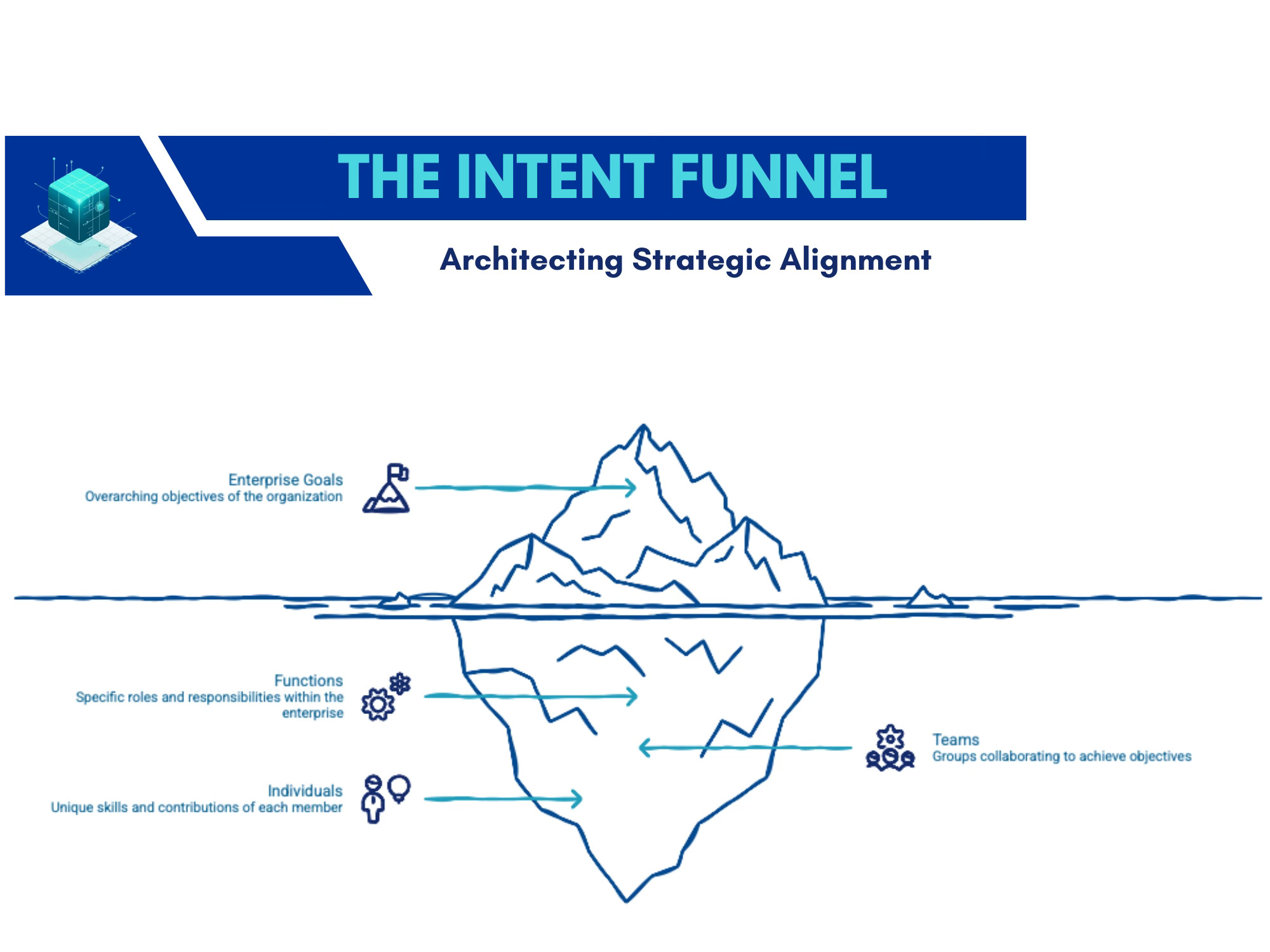
If you break down a company into its component parts, two things become widely apparent:
They are a series of interconnecting processes running from the very top of the sales funnel right down to post-production support.
They continuously aspire to be something greater. This is a necessity driven by competition and disruption, but also by that natural human desire to achieve.
Most organizations tackle that second point by setting goals. Unfortunately, they rarely achieve them. If you ask me, companies aren't struggling with "complex goals", they’re suffering from an Alignment Leak. Powering through 60-hour weeks and trying to gain alignment through new Slack channels and endless meetings is a common occurrence. However, when the end of the quarter hits and the needle hasn’t moved, all that’s left are levels of frustration from the boardroom right down to the individual contributor.
This is an Invisible Tax in its most predatory form, and the source is difficult to find for the untrained eye. I’m here to provide clarity for you: When individual goals aren’t hardwired to the company’s core strategy, you’re paying a tax on every hour worked. Meaning noise generation lifts and stays high while the business slows from the collective loss of momentum.
The common reaction to this failure is to blame motivation or culture. We assume our people just didn’t try hard enough or that the team needs another alignment offsite. But as a Strategic Architect, you know better. It’s less about motivation and more of a systemic architecture problem.
Let’s explore how to transform your current goal setting strategy into a bonafide intent funnel.
System Discovery: The Root Logic
Goal setting should never happen in a vacuum. Before writing a single objective, you first need to perform System Discovery. Meaning: you have to understand the broader context of your organization. The Root Logic of the company.
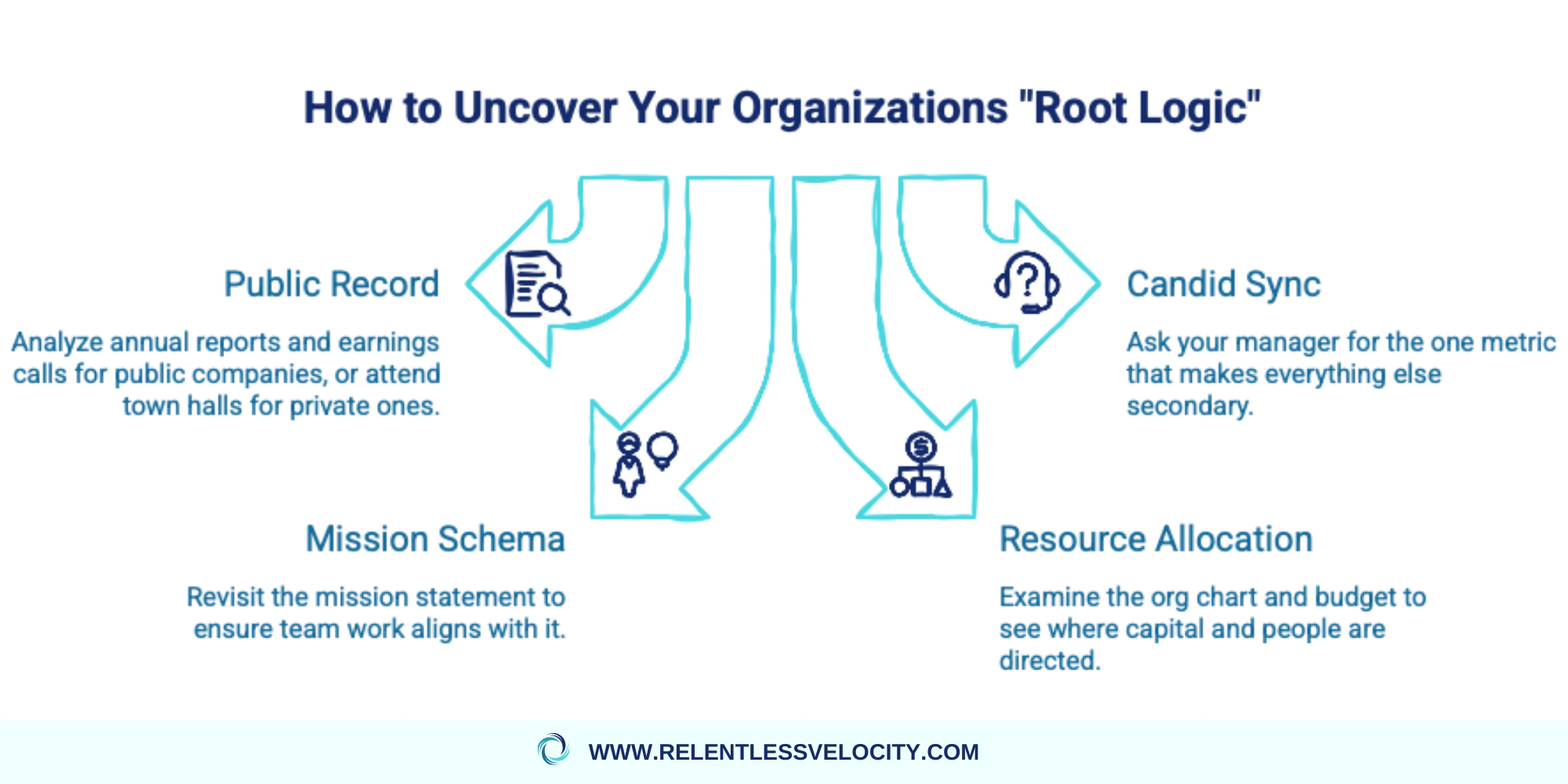
Achieving a goal that doesn’t roll up to something meaningful should from this moment forward been seen as a waste of resources and time. To ensure your build is valid, you need to anchor it in these four discovery points:
1. The Public Record
For public companies, annual reports and quarterly earnings calls should serve as your blueprint in uncovering the root logic of your company. For private ones that don’t have this luxury, town halls and all hands meetings are the signal. When attending these sessions, be sure to read between the lines. What is leadership prioritizing? What are they ignoring? If the CEO spends twenty minutes talking about “Efficiency” and zero minutes on “New Markets,” your goals better be focused on optimization, not expansion.
2. The Candid Sync
Most people ask their manager for feedback. A Strategic Architect asks for telemetry. Ask your manager a high-density question: “What is the one metric that, if hit, makes everything else we do secondary?” This question gets straight to the point and forces them to identify the actual North Star of the department.
3. The Mission Schema
Regardless of how long you’ve worked at your current company, take some time to revisit the mission statement. It may sound cliché, but in a high-velocity company, especially one that’s founder led, the mission statement means something and can be seen as the System Requirement. If your team’s current work doesn’t reflect that mission, you have a structural flaw in your department.
4. Resource Allocation
Nothing reveals a company's true priorities like the way they move their capital and their people. To finish your System Discovery, It’s a good idea to have a look at the org chart and the budget. Strategy is expensive; if the company isn't spending money on it, it isn't the strategy. If the company is hiring fifty engineers and zero sales reps, the root logic is product-led growth. Align your effort with that current.
The Outputs / Capabilities Framework
With your goals aligned to the funnel, you need one final component before execution: a feasibility audit. This framework ensures your goals are challenging but structurally sound. Most importantly, this is your best opportunity to look inward and directly tie it to the North Start you worked so hard to obtain during the system discovery.
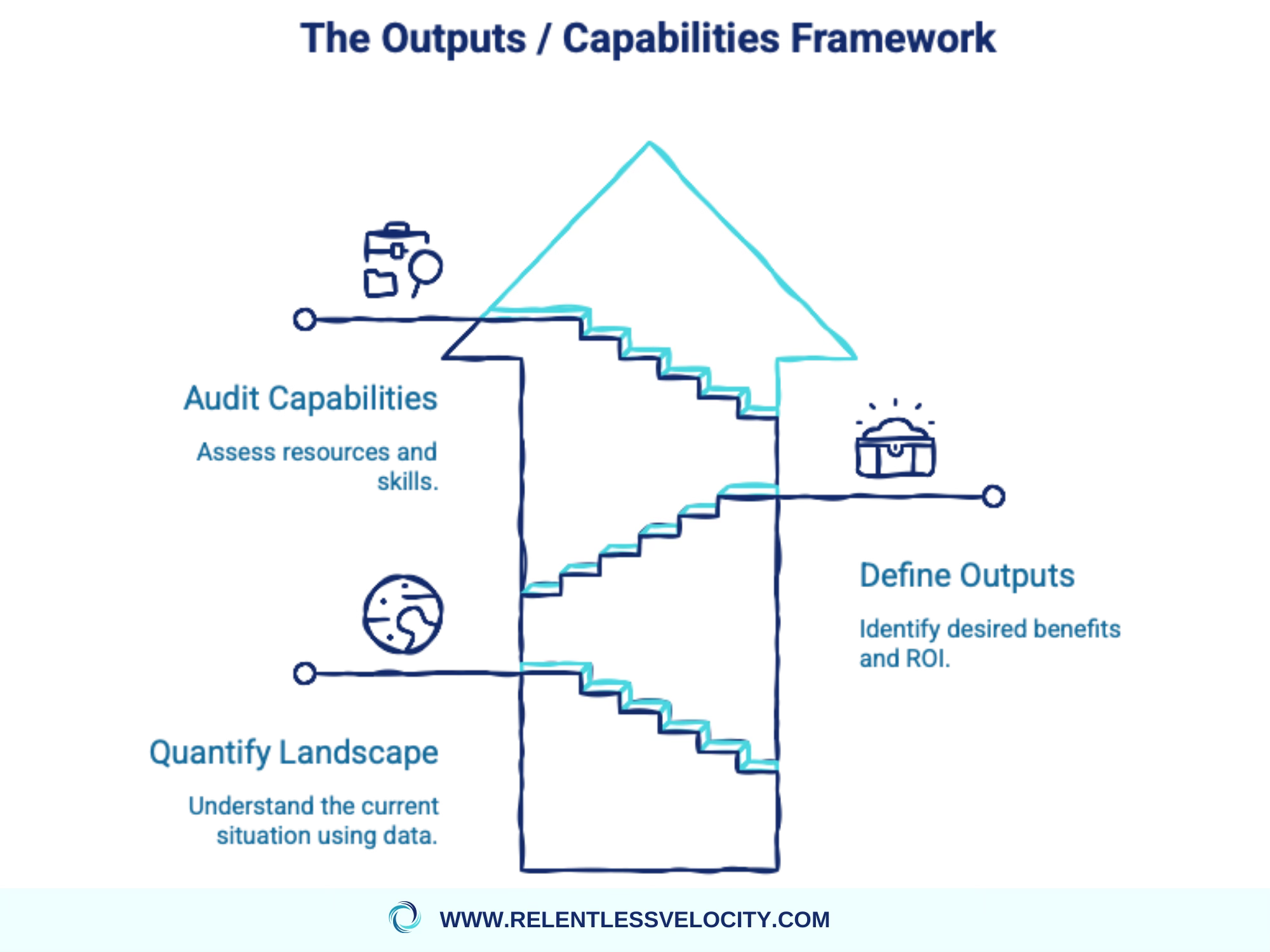
The Landscape (Quantifiable Starting Point): To set an impactful goal, you have to know where you’re standing. Relying on emotions or gut feelings leads to black box decisions. Data is your best friend here. Quantify the pain points before you try to solve them. Be sure to tie what you uncover through data, with the bigger picture. Yes, I’m not going to let you forget that critical piece!
The Outputs (The Return on Investment): Think of the effort you put into achieving your goal as the journey, and the outputs as the destination. Identify the actual benefits you want to realize and tie them directly to a true return on investment.
The Capabilities (Resource Audit): While it’s great to shoot for the moon, being overly ambitious without understanding your current hardware leads to burnout. Do you have the skills, budget, and time necessary? It’s better to architect a series of small, high-velocity wins than to launch a project that stalls at the halfway point.
Architect’s Tip: Focusing on the landscape first is critical as it starts you off by questioning reality using real world use cases. It also gives you the opportunity to take an objective approach to goal setting. Your goal is to hard-wire your personal growth to the system’s output; if your win doesn’t trigger a ripple effect upstream and downstream, it’s a localized success with no systemic value.The Final Linter (SMART Logic)
Goals need structure. There’s no getting away from it. To ensure your goals are executable, we use the framework that is as tried and true as they come: The SMART linter. It’s the final check to ensure your intent is translated into action.
Here is what each acronym in the SMART framework represents, for those that need a reminder.
Specific: Eliminate generic language. Specificity ensures you are focused on what truly matters.
Measurable: If you can’t instrument it, you can’t govern it. Use telemetry to celebrate wins and identify leaks in real-time.
Achievable: Strike the Goldilocks balance. Your goals should be big enough to keep the team engaged but realistic enough to prevent a total system crash.
Relevant: Goals are the North Star. The most meaningful goals are those that align with a larger purpose or mission.
Time-Bound: Deadlines are critical as a lack of one becomes a suggestion. Set hard deadlines to create the necessary pressure for velocity.
The Governor’s Perspective: From Doing to Architecting
Moving into leadership means your relationship with goals has changed forever. You are no longer the one turning the gears; you are the one ensuring the gears are actually connected to the engine. Your priority is now alignment governance.
Professionals who are great at strategy do two things better than anyone else: They have an absolute grasp of the company ethos, and they possess the ability to infuse that knowledge into every fibre of the organization.
If your team is struggling to set goals, don’t look at their performance as a starting point. Instead, look at your architecture. Usually, it means the Intent Anchor you provided was too vague. If you provide your people with a high-density MVC (Minimum Viable Context), they won't just hit their targets; they will architect the most efficient route to get there.
Goal setting is systemic. If companies figure out how to align the intent funnel in all areas of the business, watch out.